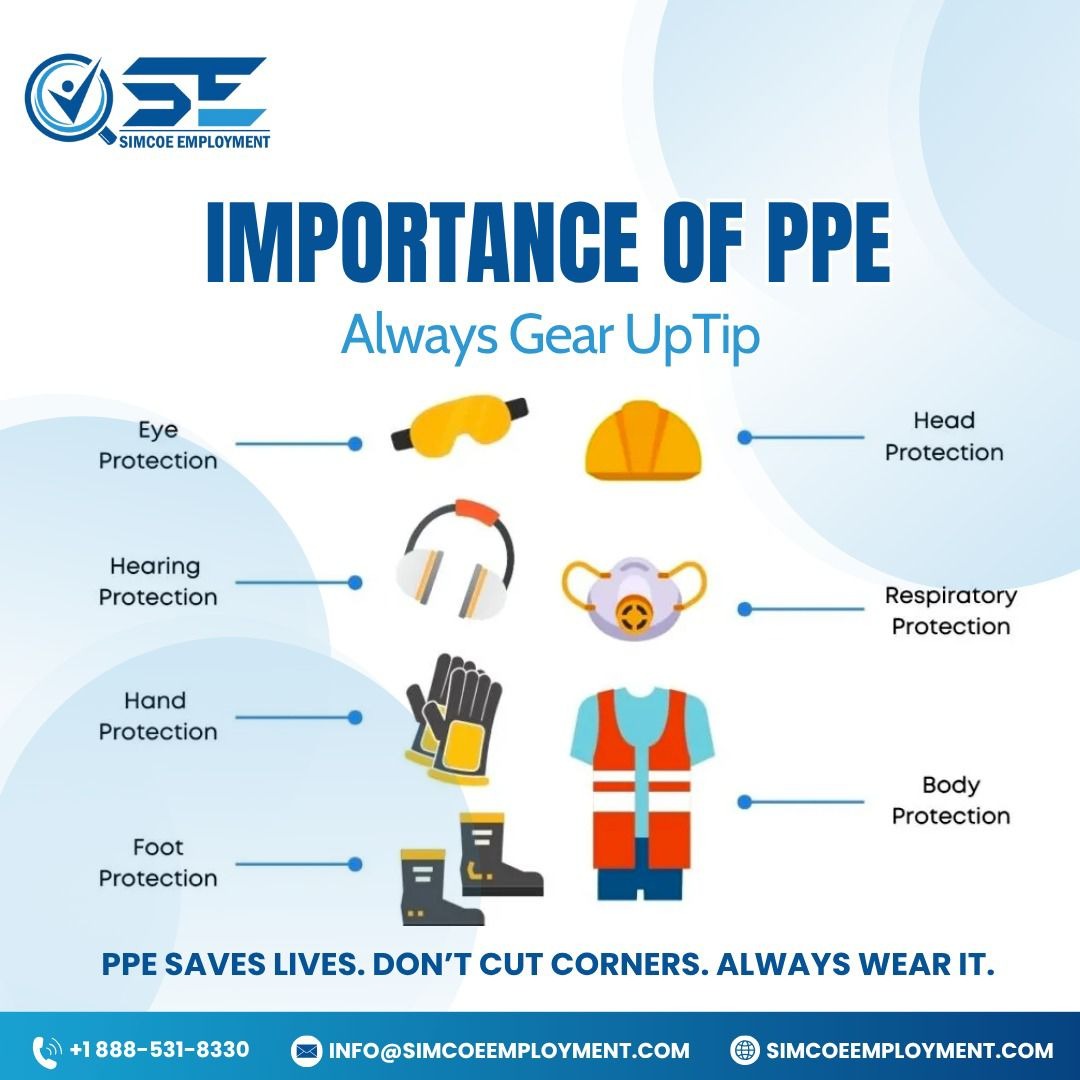
Training on the Following PPE: Respirators and Hearing Protection
Hearing Protection is essential for preventing noise-induced hearing loss (NIHL) and safeguarding auditory health in noisy environments.
- Prevention of Hearing Loss: Prolonged exposure to loud noises can lead to irreversible hearing damage. Hearing protection devices (HPDs) such as earplugs and earmuffs significantly
reduce the intensity of sound that reaches the inner ear, thereby minimizing the risk of NIHL. - Workplace Safety: In industries like construction, manufacturing, and aviation, workers are often exposed to hazardous noise levels. Hearing protection is crucial in these settings to
maintain the auditory health of employees and comply with safety regulations. OSHA mandates that when noise levels exceed 85 decibels (dB), employers must implement a hearing conservation program.
- The primary purpose of respiratory protection is to safeguard individuals from inhaling harmful airborne contaminants, ensuring their health and safety in various environments
- Respiratory protection is vital for ensuring the safety and health of individuals exposed to airborne contaminants. It plays a crucial role in preventing respiratory diseases,
complying with safety regulations, and serving as a last line of defense in hazardous environments. Proper selection, use, and maintenance of respiratory protective equipment are
essential for maximizing its effectiveness in protecting workers.